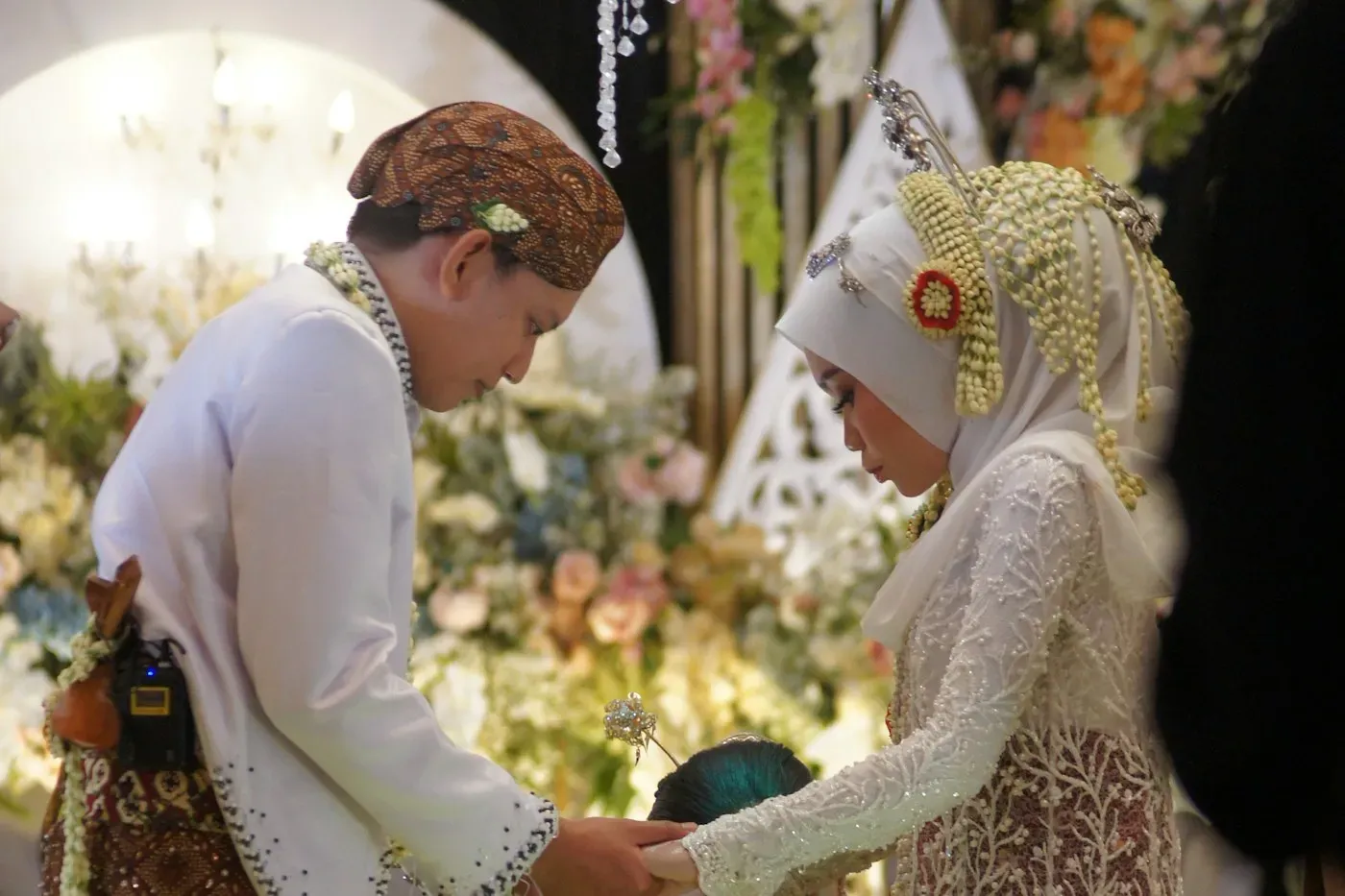

The meaning of the evening
Midodareni is a quiet night when the bride is believed to be visited by heavenly beings. It is spent at home with close family, prayers, and gentle conversation.
How to plan it
Keep the guest list small and the atmosphere calm. Soft lighting, jasmine, and a simple meal are enough.
- Invite only close family
- Prepare a quiet room for the bride
- Keep the program under two hours
The traditions within the evening
Midodareni includes several small rites. The groom's family visits to deliver seserahan, the groom is introduced to the bride's family, and a meal is shared, while the bride remains in her room.
In some families the groom is offered a simple meal and water as a sign that he is ready to take responsibility. Ask the elders which customs your families follow.
- Arrival of the groom's family with seserahan
- Words of welcome from both fathers
- A shared meal and prayers
Styling the room
The atmosphere should feel calm and intimate rather than festive. Warm lamps, low seating, and a few arrangements of jasmine and roses set the tone better than a stage or bright decoration.
Keep the bride's room especially peaceful. Close family can visit her quietly, and she should have time to rest before the long day ahead.
Practical tips for the night
Midodareni often falls on the same evening as final preparations for the wedding. Make sure vendors working at the house know when guests arrive, so setup does not interrupt the rites.
End the evening early. The bride and both families need sleep, and a gentle close to the night makes the morning of the wedding far easier.